
Best Stretches for Desk Workers: A Gentle, Area-by-Area Guide
Written by the Movana editorial team · Clinically reviewed by Dr. Vinuta Harapanhalli, PT (September 16, 2026)
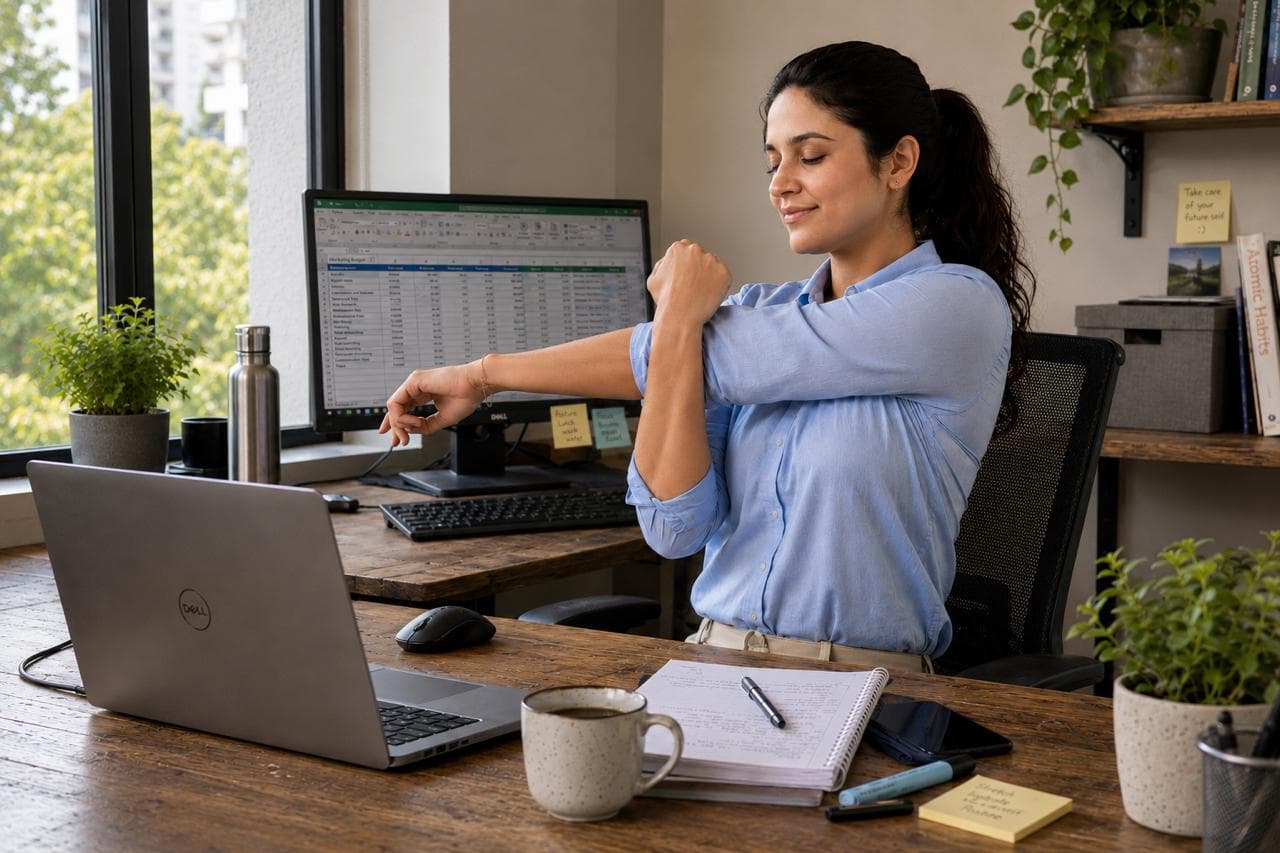
If your neck feels tight by lunchtime and your lower back is stiff when you finally stand up, you’re in good company. For most desk workers the story isn’t a dramatic injury — it’s the slow, daily build-up of tension that comes from sitting in one position for hours. The good news is that a few minutes of the right movement, done regularly, can make a real difference to how your body feels through the day.
This guide walks through gentle desk stretches, grouped by area. None of them require equipment or a change of clothes, and each one is gentle enough to do between meetings. Move slowly, stay within a comfortable range, and never push into sharp pain.
Why sitting all day creates tension
Your body is built to move. When you hold any position for a long time — even a “good” one — some muscles stay switched on while others switch off. At a desk, the head drifts toward the screen, the shoulders round forward, the chest closes, and the hips stay folded. Over a workday that adds up to tightness in predictable places: the neck, the tops of the shoulders, the lower back and the front of the hips.
Stretching won’t change the fact that you sit for work, but short, regular movement breaks are designed to support a body that does. Think of them less as a fix and more as small, frequent resets.
How to stretch safely
A few principles make desk stretching both comfortable and effective:
- Move slowly. Ease into each position and let the tissue release over a few breaths, rather than forcing or bouncing.
- Breathe. Long, slow exhales help muscles relax. If you’re holding your breath, you’re probably trying too hard.
- Stay pain-free. A gentle stretch is fine; sharp, radiating or pinching pain is your cue to back off.
- Be consistent. Two minutes several times a day beats one long session once a week.
One important note: if you have a specific injury, a recent surgery, or symptoms like numbness, tingling or pain that travels down an arm or leg, check with your doctor or physiotherapist before starting. The routines below are general wellness movements, not a treatment plan.
The best stretches, area by area
1. Neck
The neck is where most desk workers feel tension first. A gentle side-to-side stretch — lowering one ear toward your shoulder and holding for around 30 seconds — helps lengthen the muscles along the side of the neck. Add a slow forward fold of the chin toward the chest to release the back of the neck. Keep your shoulders relaxed and down throughout, and never roll your head backward.
2. Shoulders
Start with slow shoulder rolls to wake the area up, then open the chest by clasping your hands behind your lower back and gently lifting. A cross-body stretch — drawing one arm across your chest with the other hand — releases the back of the shoulder. These movements counter the forward, rounded position that builds over a day of typing.
3. Upper back and chest
The muscles between your shoulder blades quietly fade into the background when you sit. Gentle shoulder-blade squeezes — drawing the blades together and slightly down — help switch them back on. Pair that with a doorway chest stretch to open the front of the body. Together they support a taller, more upright posture without you having to force it.
4. Lower back
A seated cat–cow, rounding and arching the spine in time with your breath, is one of the kindest things you can do for a stiff lower back. A slow seated twist to each side and a gentle forward fold over your thighs round out a simple lower-back reset you can do without leaving your chair.
5. Hips
Sitting keeps the hips folded and the muscles at the front of the thighs short. A standing hip-flexor stretch — stepping one foot back into a soft lunge and tucking the tailbone slightly — lengthens the front of the hip. A seated figure-four, crossing one ankle over the opposite knee, opens the outer hip. Hold a desk for balance and keep it gentle.
6. Wrists and hands
Hours of typing and scrolling tire the wrists and forearms. Slow wrist circles, followed by gentle forearm stretches with the palm facing down and then up, give busy hands a welcome reset. Finish by spreading the fingers wide and making a soft fist a few times.
How often should you stretch?
Little and often is the goal. A realistic, sustainable rhythm is a short reset every 45 to 60 minutes — even just one or two stretches. If that feels like a lot, start with a single five-minute routine once a day and build from there. The best routine is the one you’ll actually repeat, which is exactly why we designed Movana around short, structured sessions rather than long workouts.
If you’d like a ready-made plan, our free 7-Day Desk Reset program walks you through one focus area each day — create a free account to start.
When to see a professional
Stretching is a great general-wellness habit, but it isn’t a substitute for proper assessment. See a doctor or physiotherapist if you have pain that is severe, persistent or getting worse; numbness, tingling or weakness; pain that radiates into an arm or leg; or any symptom that worries you. A professional can assess you in person and give advice tailored to your body.
The bottom line
Desk-related stiffness builds slowly, and it responds well to small, regular movement. Pick two or three stretches from this guide, fit them into the natural pauses in your day, and let consistency do the work. Your future self — and your neck — will thank you.
Want these stretches organised into a simple daily habit? Start the free 7-Day Desk Reset — short routines reviewed by Dr. Vinuta, one at a time.

7-Day Desk Reset
A gentle, one-week introduction to moving better at your desk — one focus area each day.
3–14 min a day · Beginner · 7 days
See the programMore on this topic: Moving more when you sit all day — routines, programs and common questions in one place.
Not sure where to start? Take the free 2-minute Desk Wellness Index for a personalised starting point.